


Since ancient times, the Chinese nation has consistently pursued exploration and innovation. The Big Dipper guides the way, while the compass determines direction. On July 11, 1405, Chinese navigator Zheng He embarked on his first voyage to the Western Seas, embarking on a journey to promote exchanges between China and foreign countries. Today, the Beidou system, as an important national spatial infrastructure, leads the way for navigation. July 11, 2022, marks the 18th Navigation Day in China. The theme of this year's Navigation Day is "Leading the New Trend of Green, Low-Carbon, and Intelligent Navigation". Based on intelligence, agility, green and low-carbon principles, as well as safety and controllability, new infrastructure is being constructed in a coordinated, high-quality, and efficient manner, facilitating the in-depth development of Beidou applications at sea. Today, let's take a look at the various functions of the Beidou system when navigating at sea!
Maritime communication
Intimate service for voyagers
The Beidou-3 short message service is one of the important means of maritime communication, and it is widely welcomed by fishery departments and fishermen. In maritime areas where mobile signals are weak or even nonexistent, the use of Beidou terminals for fisheries not only allows for precise positioning of fishermen but also enables maritime communication. Fishery departments can send early warning information to fishermen in a timely manner, and fishermen can also use Beidou terminals to contact management personnel and family members onshore.
In the Yellow Sea and Bohai Sea, tens of thousands of fishing boats operate here during the fishing season every year. The overlapping activities and spaces of commercial and fishing boats affect production safety and management efficiency. The Yantai Maritime Safety Administration and the Yantai Oceanic and Fishery Administration have jointly compiled safety information on preventing collisions between commercial and fishing boats. The fishery department promptly and accurately delivers this information to fishing boats in specific areas through Beidou short messages, achieving precise safety reminders, effectively enhancing the management efficiency of commercial and fishing boats, and ensuring the safety of people's lives and property.

Currently, the Beidou system has provided positioning and short message communication services to over 40,000 ocean fishing boats, safeguarding the safe production of fishermen.
fishing moratorium supervision
Safeguarding Sustainability
Since 1995, China has implemented a summer fishing moratorium strategy, which effectively protects fishery resources and promotes sustainable development. The deployment of ship-borne terminals based on the Beidou system and the fishery law enforcement monitoring and management system in various regions has continuously improved the management effectiveness and level during the summer fishing moratorium period.
Many regions have formulated management plans and regulations for the fishing moratorium period, and have implemented the positioning of fishing boats in port one by one. At the same time, they have inspected the Beidou terminals of each fishing boat to prevent illegal operations and unauthorized sea voyages during the fishing moratorium period. At the same time, they are actively building a dynamic supervision system of "human defense + technical defense", using the Beidou system to effectively stabilize the situation of the fishing moratorium and safeguard the legitimate rights and interests of fishermen. In the future, the Beidou system will continue to deepen its application in fishery management, protect fishery resources, protect the interests of fishermen, and achieve sustainable development of the fishery industry.

navigation mark maintenance
On-site management is more efficient
In recent years, Beidou has continuously played a role in the maintenance of navigation aids in various places.
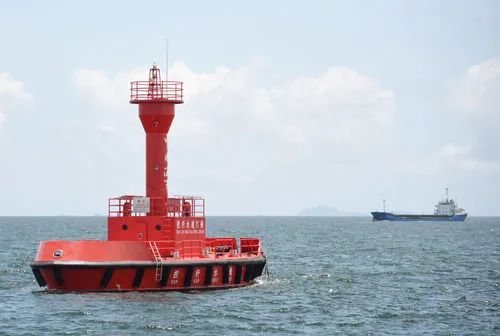
All public navigation aids within the jurisdiction of the Sansha Navigation Aids Office of the Nanhai Navigation Support Center of the Ministry of Transport have adopted remote management through Beidou terminals, achieving a 100% Beidou coverage rate. The use of Beidou terminals effectively assists the Sansha Navigation Aids Office in maintaining regular duty at key offshore islands and reefs. These public navigation aids provide efficient support for various facilities such as navigation aids, hydrographic surveying and mapping, and maritime communication.
At the Ningbo Navigation Aids Office of the East China Sea Navigation Support Center of the Ministry of Transport, all 612 public navigation aids in the waters of Ningbo Zhoushan Port that can be equipped with Beidou terminals have been installed with Beidou equipment, achieving full coverage of the Beidou system on public navigation aids. This enables high-precision maritime positioning at "meter level", "decimeter level", and "centimeter level" in specific waters. The data transmission performance is reliable, effectively solving the problems of weak public network signal coverage in some waters and easy interruption of telemetry signal transmission.
Maritime internationalization
Demonstrate responsibility and accountability
The Beidou system has achieved new results in the field of maritime internationalization, which not only further promotes the Beidou system to serve the world and benefit mankind, but also highlights China's responsibility and commitment as a major country.
In March 2020, the International Electrotechnical Commission (IEC) officially released the first international standard for the testing of Beidou shipborne receiving equipment (IEC 61108-5). The release of this standard will lay the foundation for the subsequent development and revision of IEC standards for related terminals such as Beidou ground-based augmentation, satellite-based augmentation, international search and rescue, and short message communication, marking the official entry of Beidou into international maritime industry applications.
In March 2022, the 66th Council of the International Satellite Organization for Search and Rescue (CSC-66) confirmed that the six search and rescue payloads carried by the Beidou system met the standard requirements of the space segment of the global medium-orbit satellite search and rescue system, marking the completion of all technical review work for Beidou's participation in the International Satellite Organization for Search and Rescue. This is another important progress in the internationalization of Beidou maritime affairs. At the meeting, the Radio Technical Commission for Maritime Services (RTCM) stated that the Beidou search and rescue payloads have excellent link margin, which can effectively improve the efficiency of distress beacon identification.
According to the "2022 White Paper on the Development of China's Satellite Navigation and Location-Based Services Industry", the Beidou system has been deeply applied in fields such as maritime affairs and fishery production, with the Beidou equipment rate of maritime official ships reaching 100%. Moving forward, we will continue to comprehensively build a spatiotemporal intelligence industry ecosystem to better serve and integrate into the new development paradigm. By 2035, we will also promote the establishment of a more ubiquitous, integrated, and intelligent PNT system centered around the Beidou system and incorporating multiple navigation methods. By then, users will be able to enjoy fully covered and highly reliable navigation, positioning, and timing services from indoors to outdoors, and from deep sea to deep space. The Beidou satellite navigation system will better serve the world, benefit humanity, and contribute Beidou wisdom to navigation.